Tomorrowland's CORE Melbourne 2026 Lineup Revealed
CORE Festival Australia 2026: What You Need to Know
Tomorrowland's CORE stage has been running as a standalone touring event since it outgrew its origins in the Belgian forests, and Melbourne is its next stop. CORE Melbourne takes over Flemington Racecourse on Saturday, November 28, 2026 for a single-day event running from 2pm to 11pm. It is the first time any Tomorrowland-affiliated event has touched Australian soil.
The lineup dropped today, and the programming tells you exactly what CORE is and is not. This is not a mainstage EDM festival. There is no David Guetta. No confetti cannons timed to drops. CORE's identity sits in underground house and techno, and the Melbourne bill is built accordingly: Honey Dijon, Moodymann, Kobosil, TSHA, Mall Grab b2b Effy, and a local undercard that draws from Melbourne's club circuit. The event is produced locally by Framed and Pitch Control, both well-established in Melbourne's electronic scene.
The Lineup
Top Bill
Honey Dijon is the marquee booking. The Chicago-born, New York-based DJ has built her reputation across two decades of house music, with a mixing style rooted in classic Chicago and New York house that sits comfortably in both festival and club settings. She played CORE Medellín earlier in 2026 and has been a recurring presence in the CORE ecosystem. Expect deep grooves, disco edits, and four-on-the-floor sets that build slowly and stay warm.
Moodymann brings Detroit. Kenny Dixon Jr. has spent 30 years making soul-inflected house music that resists easy categorisation; his DJ sets pull from funk, R&B, jazz, and house with an improvisational looseness that makes each performance unpredictable. He is a rare booking for an Australian festival. Detroit purists will understand the significance; everyone else will notice the groove.
Kobosil represents the harder end of the card. A Berghain resident since his early twenties, the Berlin-based DJ and producer deals in industrial techno, fast tempos, and relentless energy. If Honey Dijon provides the warmth, Kobosil provides the pressure. The contrast is deliberate; CORE lineups tend to programme tension between opposing ends of the spectrum.
Daria Kolosova adds another hard-edged dimension. The Ukrainian DJ and producer has become one of the most in-demand techno bookings in Europe over the past two years, with sets that combine breakbeat, hard techno, and industrial textures. Her inclusion continues CORE's pattern of booking artists who sit at the intersection of club credibility and rising momentum.
TSHA balances the card on the melodic side. The London-based producer's music draws from UK garage, ambient, and deep house; her productions feature vocal samples and warm synth textures that sit at the more accessible end of the underground. A useful counterweight in a lineup that otherwise leans toward the heavier side.
B2B Sets
Mall Grab b2b Effy is the pairing that will draw the most attention from local audiences. Mall Grab (Jordan Alexander) is a Melbourne export who has built an international career on raw, lo-fi house and club music; Effy is a UK-based DJ whose sets run the range from UKG to breakbeat to hard-edged club tracks. The back-to-back format promises a high-velocity set that moves unpredictably. Mall Grab also played CORE Los Angeles in May 2026, so his involvement with the CORE brand is established.
Lola Voss b2b Billy Currie and Noise Mafia b2b Peterblue round out the collaborative bookings. Both pairings draw from Melbourne's local scene.
Local and Supporting Acts
Jennifer Loveless is one of Melbourne's most respected electronic selectors, with a genre-fluid approach that moves through house, electro, techno, and oddball club music within a single set. Jnett is a Melbourne house fixture. Dino Lenny, Fumi, Hannah D, and Hitmiløw fill out the rest. The local contingent is not an afterthought; several of these names headline their own club nights and hold residencies across Melbourne's venues.
Tickets
Tickets are tiered by release round, with prices rising as each round sells out. All fees are included in the listed prices.
| Tier | Round | Price |
|---|---|---|
| General Admission | First round | $210.50 |
| General Admission | Second round | $220.75 |
| General Admission | Final round | $231.00 |
| Stage Access VIP | Single tier | $518.00 |
VIP includes stage-proximity access, separate bar lanes, a dedicated garden area, separate bathrooms, and a limited-edition lanyard.
Pre-sale opens Friday 5 June 2026 at 9am AEST. Access requires either pre-registration via core.world or an existing Tomorrowland Account. If you have attended any previous Tomorrowland or CORE event worldwide, your account should already work.
General sale opens Thursday 11 June 2026 at 9am AEST. No account required.
A note on resale. CORE events globally have sold out quickly; the Medellín and LA editions both cleared their allocations within days. If Melbourne follows the same pattern, a secondary market will appear. Tomorrowland operates its own official resale platform through its ticketing system. Avoid third-party resellers; Tomorrowland events enforce name-on-ticket ID checks at the door.
What CORE Actually Is
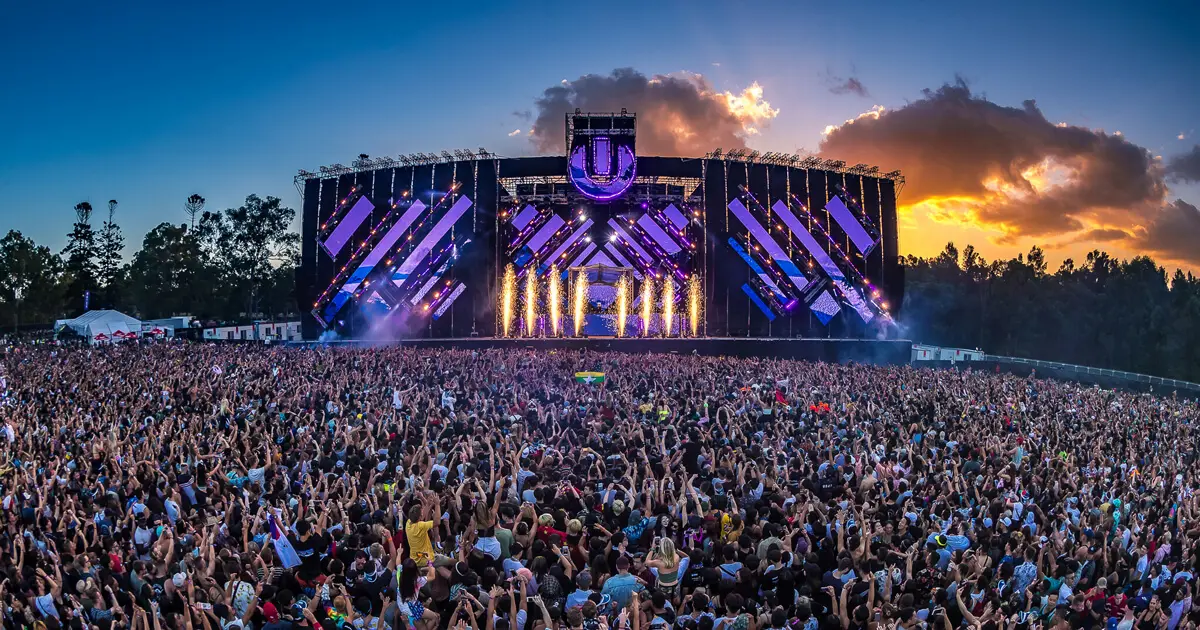
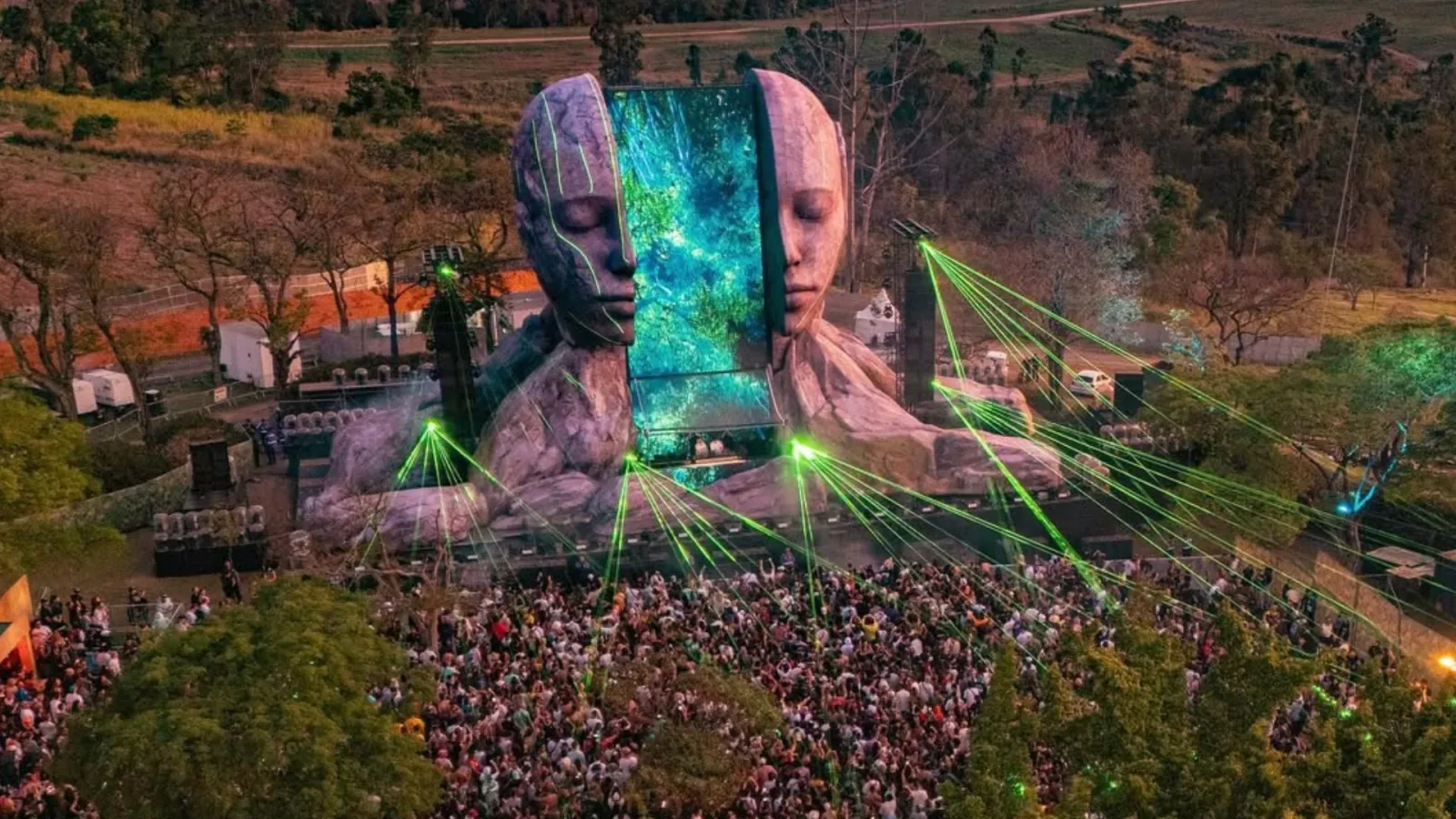
For anyone whose only reference point for Tomorrowland is the main festival in Belgium (400,000 attendees, fantasy-themed stages, Martin Garrix closing sets), CORE is a different proposition entirely. The concept started as a single stage at Tomorrowland Belgium in 2017, designed around a nature-inspired, sculptural split-face stage structure that became one of the festival's most photographed installations. The musical programming sat apart from the main stages; where the mainstage booked peak-time EDM, CORE booked underground house and techno.
It worked well enough that Tomorrowland spun it out as a standalone touring event. Medellín, Colombia hosted the first editions in 2024 and 2025, followed by a return in February 2026. Los Angeles got the US debut in May 2026, produced in partnership with Insomniac (the company behind EDC). Melbourne is the third continent in a single year, and the Australian debut.
The LA edition featured Four Tet, Eric Prydz, Nina Kraviz, Mall Grab, and Honey Dijon across two days. CORE Los Angeles has already been confirmed for a 2027 return, which suggests the format is commercially viable at scale. The Melbourne edition is a single day rather than two, but the production philosophy remains the same: one stage, immersive design, and a lineup that prioritises musical coherence over name recognition.
Flemington Racecourse: Venue Notes
Flemington Racecourse is Melbourne's most established large-format outdoor event venue for electronic music. Ultra Australia has used it repeatedly (drawing 46,000 in 2026); Rolling Loud Melbourne booked it in March 2026. The racecourse sits approximately seven kilometres northwest of the CBD in Flemington, with capacity that scales depending on the event footprint.
For CORE, expect the production to occupy a defined section of the grounds rather than the full racecourse. The CORE stage is a single-stage concept; there is no multi-stage layout to navigate. The stage design itself is part of the experience; the split-face sculptural structure with integrated lighting and projection is shipped between CORE events worldwide and adapted to each venue.
Getting There
Train is the best option. Flemington Racecourse has a dedicated railway station that operates for major events, running services from Southern Cross and Flinders Street stations. Journey time is approximately 15 minutes from the CBD. The station sits at the racecourse entrance. For an event of this size, Metro Trains will almost certainly run dedicated services; check the PTV website closer to the date. Myki Zone 1 fares apply.
Tram is the alternative. Routes along Racecourse Road and Epsom Road service Flemington, though the walk from the nearest tram stop to the racecourse entrance is longer than from the train station.
Driving is possible but inadvisable for events of this scale. Parking in the surrounding residential streets is heavily restricted during major events at Flemington; the local council (Moonee Valley) enforces permit-only parking zones and the fines are not trivial. If you drive, use the racecourse's own parking facilities and expect post-event congestion.
Rideshare surge pricing after large Flemington events is well-documented. If you are planning to leave by Uber or similar, arrange a pickup point away from the main exit on Epsom Road; Smithfield Road or the Ascot Vale end of Racecourse Road typically have shorter wait times and better traffic flow.
Post-Event Exit
The event runs until 11pm. Unlike festivals that run past midnight, you have the advantage of finishing at a time when public transport is still operating at near-normal frequency. Late-night train services from Flemington Racecourse station back to the CBD should be running; trams operate until around 12:30am on Saturday nights. This is a significant practical advantage over later-finishing festivals.
Practical Notes
Weather. Late November in Melbourne averages 23 to 25 degrees during the day and drops to 13 to 15 degrees after sunset. The event runs outdoors from 2pm to 11pm; dress for a warm afternoon and a cool evening. A light jacket you can tie around your waist is the practical move. Melbourne's weather is also famously unpredictable in spring; check the forecast the day before and pack for rain if there is any chance.
Earplugs. Outdoor electronic events at Flemington run through festival-grade PA systems. Flat-attenuation musician's earplugs (Loop, Eargasm, Etymotic) cut volume 15 to 20dB without distorting the sound. Bring them. A nine-hour event is a long exposure.
Age restrictions. 18+ with valid ID. Non-negotiable.
Hydration and food. Festival vendor pricing will apply. Flemington events typically have water refill stations; bring an empty bottle. Eating before you arrive is the cost-effective approach.
Single stage format. Because CORE runs a single-stage concept, there are no set-time clashes. Every act plays to the full crowd. This simplifies your day; you do not need to plan a schedule or make compromises between overlapping sets. Show up when the gates open and the music runs continuously until close.
Context for Melbourne
CORE lands in a Melbourne electronic calendar that is already busy at the end of 2026. Dom Dolla has December dates at Flemington. Mode Festival runs in Sydney in October. The Bizarro triple-header (Overtone, Freeform, Mode) covers October's long weekend across three cities. Adding a Tomorrowland-branded event into this mix tests whether the Australian market can absorb another premium electronic festival at the $200+ price point.
The programming differentiation helps. CORE's lineup overlaps minimally with the harder-edged festivals (Teletech, Dreamstate) and the broader underground events (Mode, Freeform). Honey Dijon, Moodymann, and Kobosil are not competing with the same audience as Barry Can't Swim or Richie Hawtin on the Mode bill. The positioning is deliberate: this sits in the space between underground club culture and large-scale festival production, which is territory that Australian promoters have largely left unoccupied.
Whether the Tomorrowland brand carries enough weight in Australia to fill a Flemington event at $210+ per ticket is the open question. The brand recognition is enormous globally, but the CORE sub-brand is less known. The lineup will need to do the selling. On the strength of Honey Dijon, Moodymann, and the Mall Grab b2b Effy pairing alone, it should.
Finding Others Going
If you are heading to CORE Melbourne and want to connect with others attending who share your music taste, Muse matches people going to the same shows based on their listening history.
See upcoming concerts in Melbourne→